
Autistic people think differently. Here are some ways an autistic worker might process information.



Alt text:
Image 1:
Title: Autistic Thinking
ISAW Logo
Schedule a consultation with ISAW to learn more!
Visit: isaw.hdiuk.org | Contact: Bev Harp at baharp2@uky.edu or Brittany Granville at bgr263@uky.edu
Image 2:
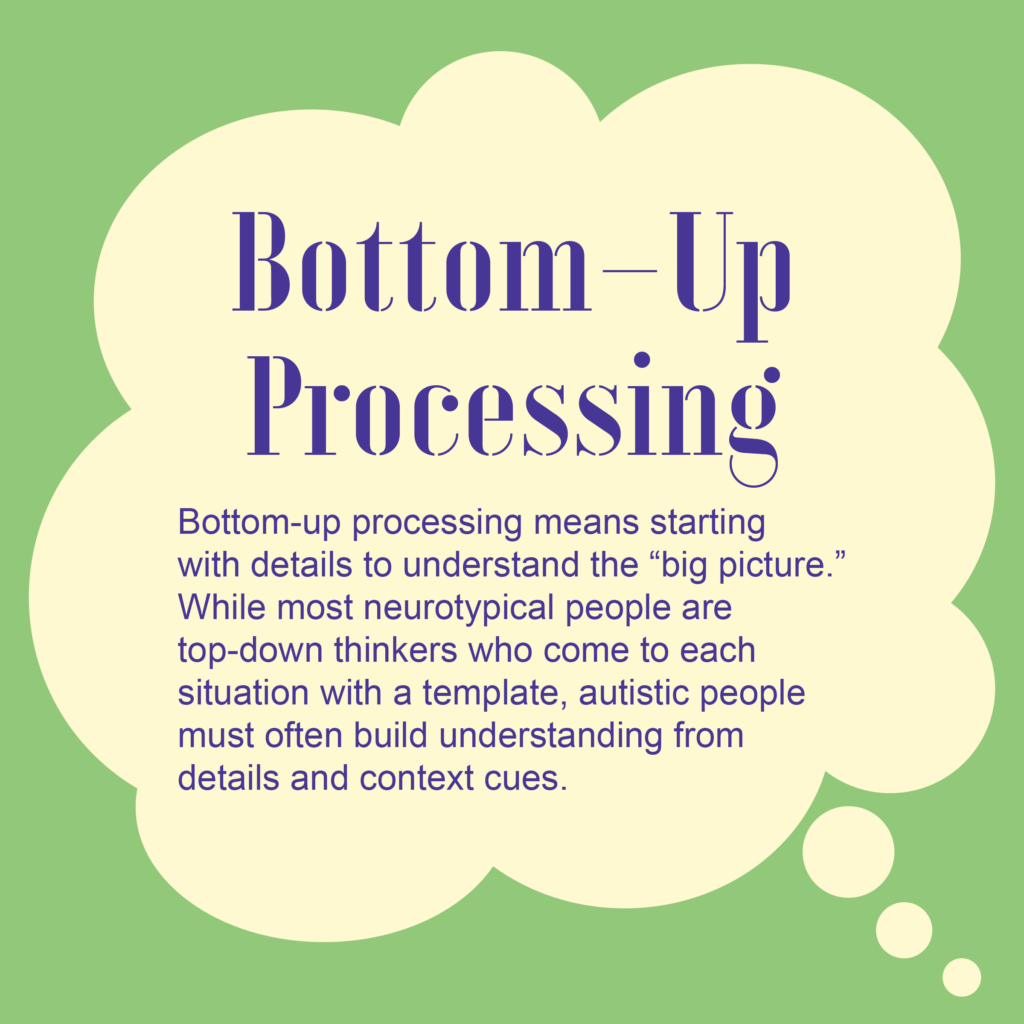
Bottom-Up Processing
Bottom-up processing means starting with details to understand the “big picture.”
While most neurotypical people are
top-down thinkers who come to each situation with a template, autistic people must often build understanding from details and context cues.
Image 3:
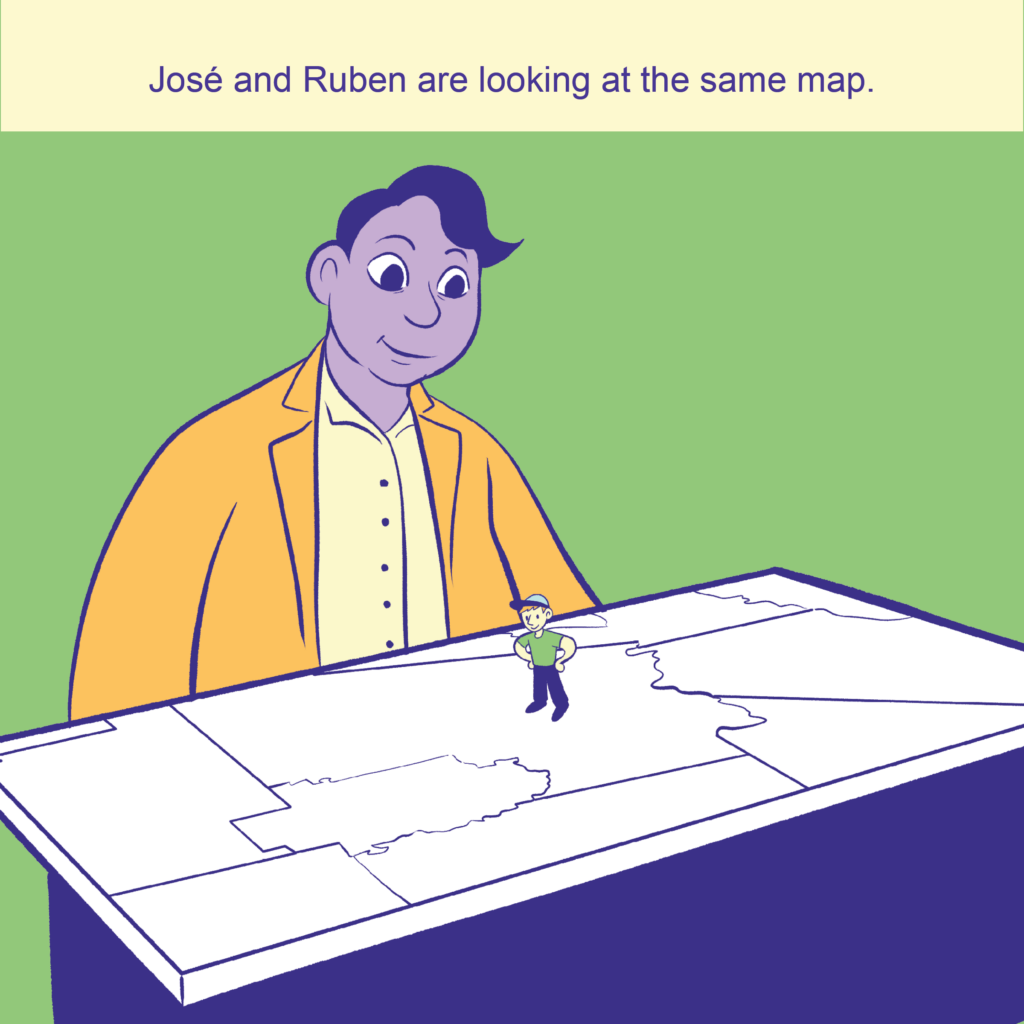
Two people looking at a map on a table. One person is big and the other is small and standing on the map.
Text: José and Ruben are looking at the same map.
Image 4:
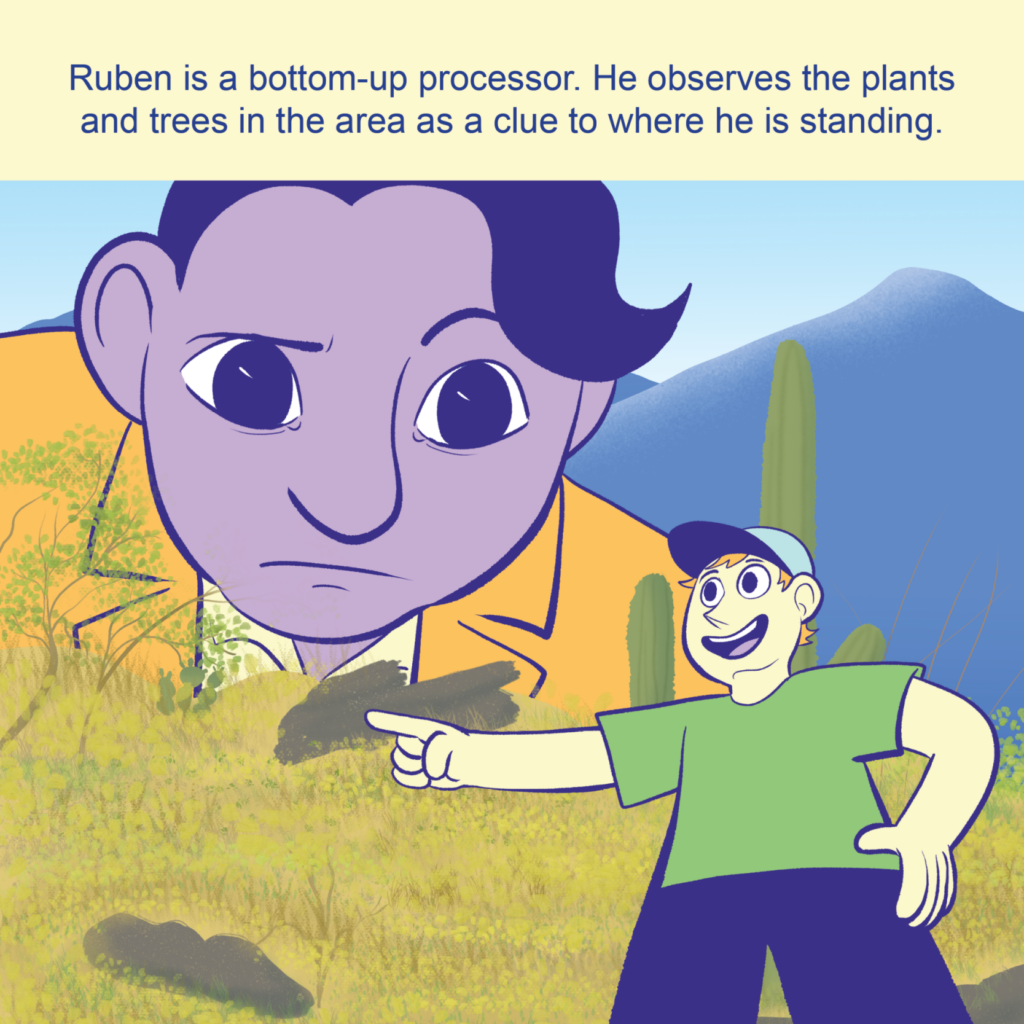
Ruben happily points while being surrounded by an Arizonian landscape, which includes mountains, rocks, trees and cacti. José looms large over the landscape, looking at Ruben confused.
Text: Ruben is a bottom-up processor. He observes the plants and trees in the area as a clue to where he is standing.
Image 5:
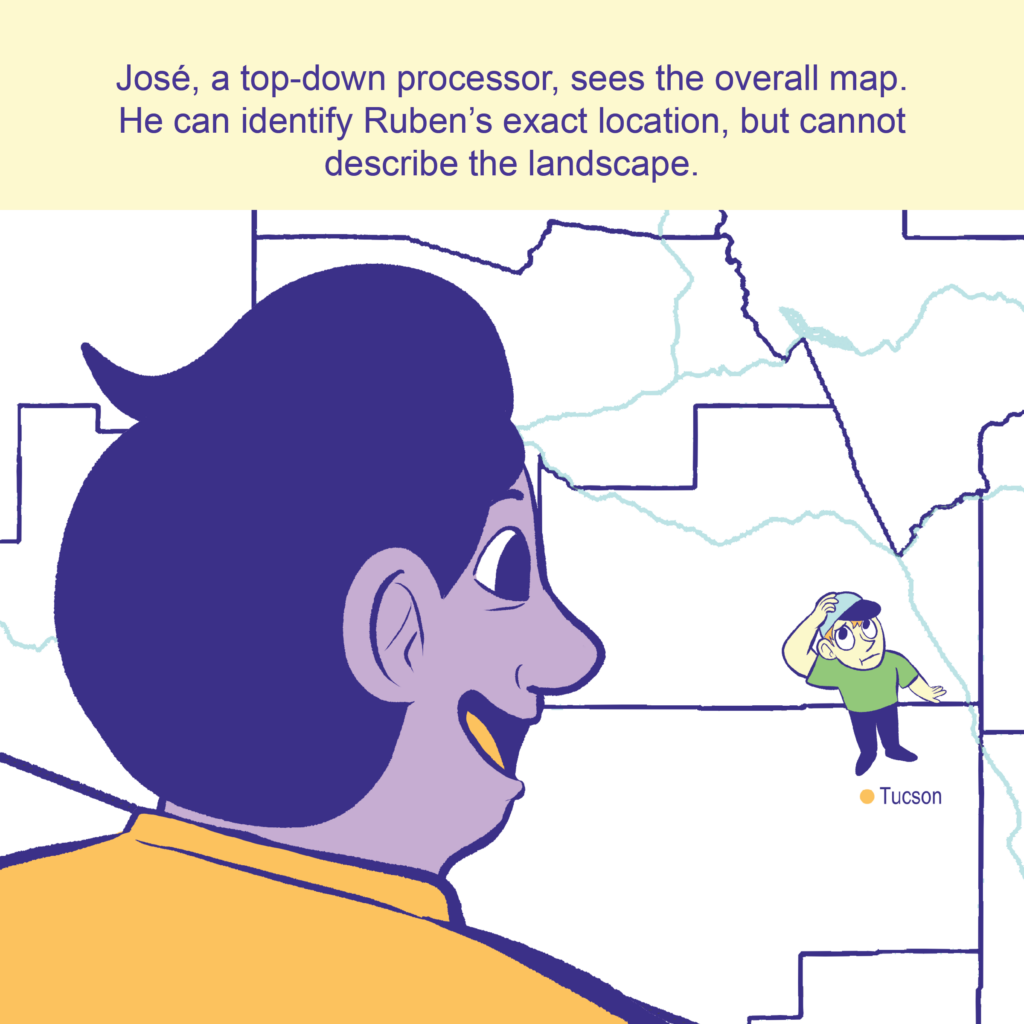
José standing over the map and seeing a simple map of Arizona, while Ruben looks up at him in confusion.
Text: José, a top-down processor, sees the overall map.
He can identify Ruben’s exact location, but cannot describe the landscape.
Image 6:
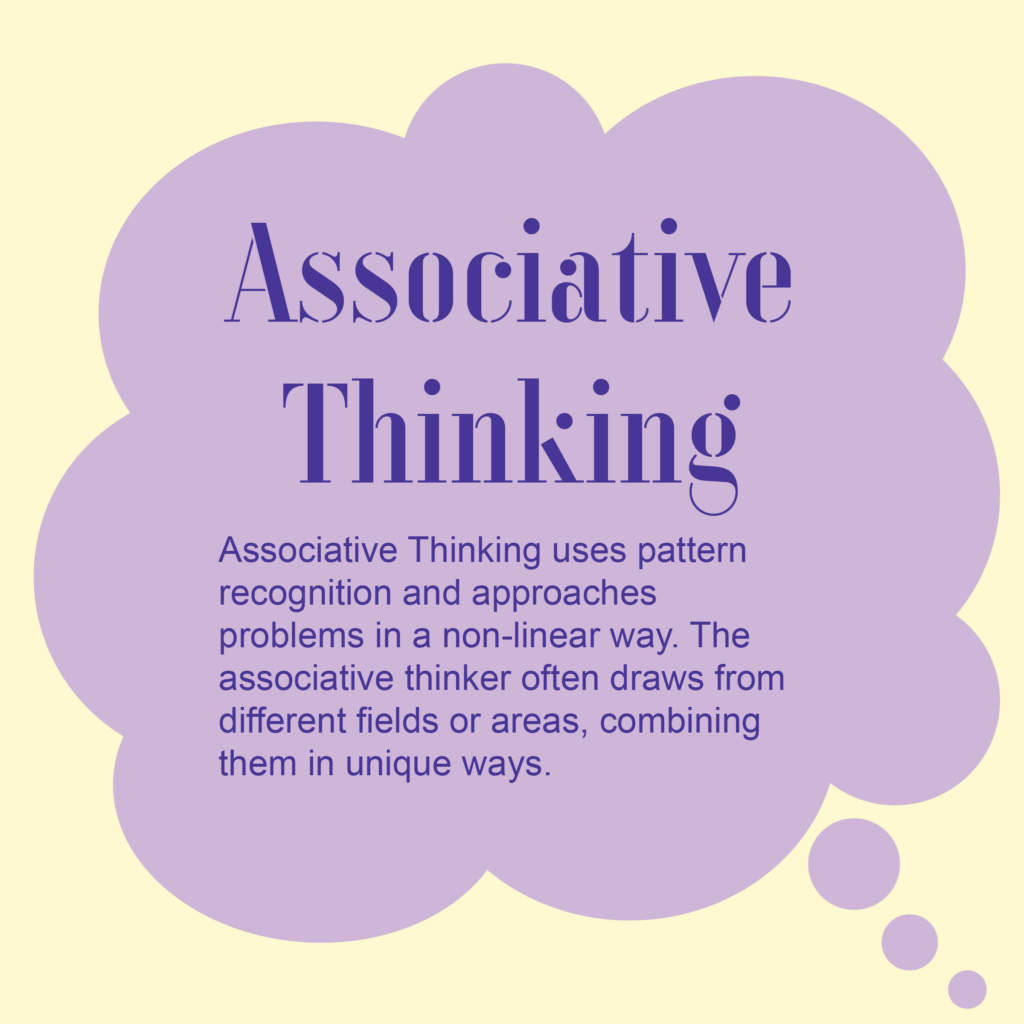
Associative Thinking
Associative Thinking uses pattern recognition and approaches problems in a non-linear way. The associative thinker often draws from different fields or areas, combining them in unique ways.
Image 7:
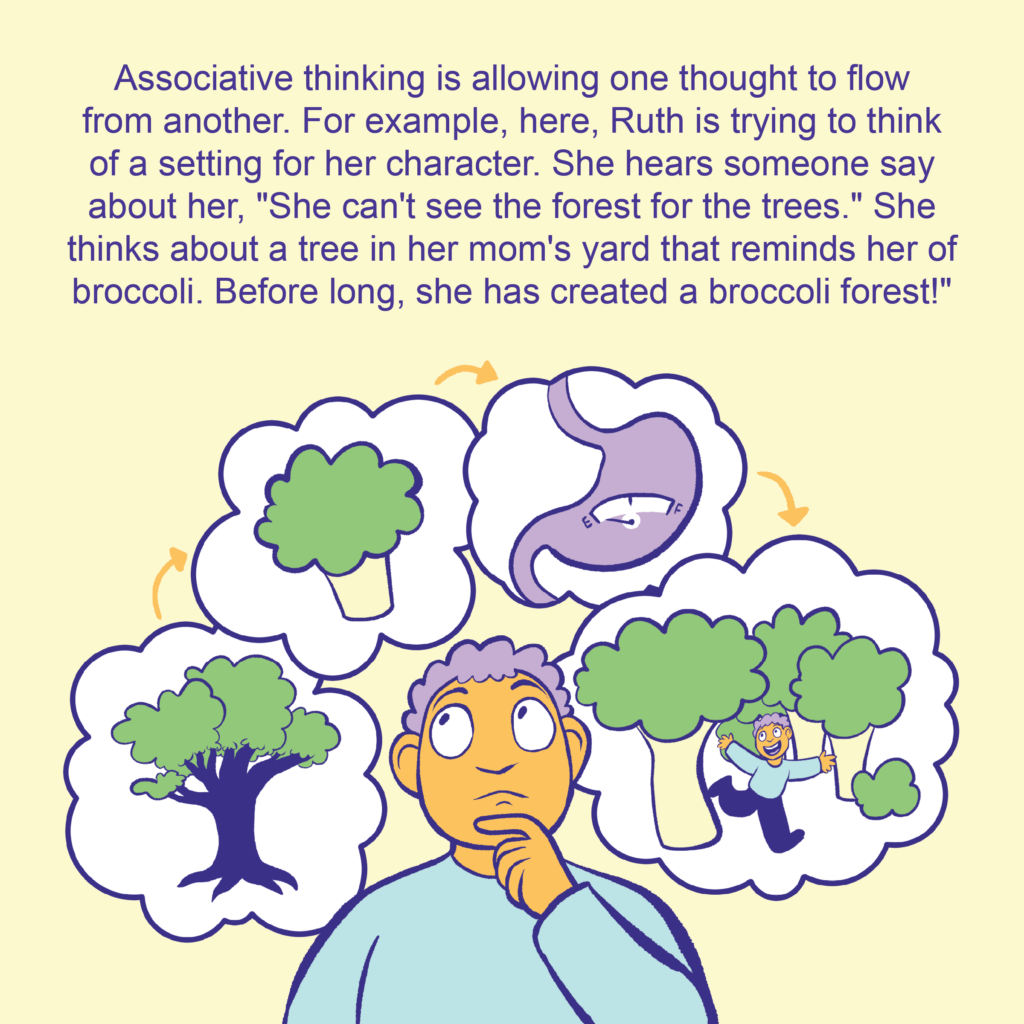
A person with four thought bubbles around them. From left to right that thought bubbles have: 1. a tree, 2. Broccoli, 3. An empty Stomach, 4. The person happily frolicking in a broccoli forest.
Text: Associative thinking is allowing one thought to flow from another. For example, here, Ruth is trying to think of a setting for her character. She hears someone say about her, “She can’t see the forest for the trees.” She thinks about a tree in her mom’s yard that reminds her of broccoli. Before long, she has created a broccoli forest!”
Image 8:
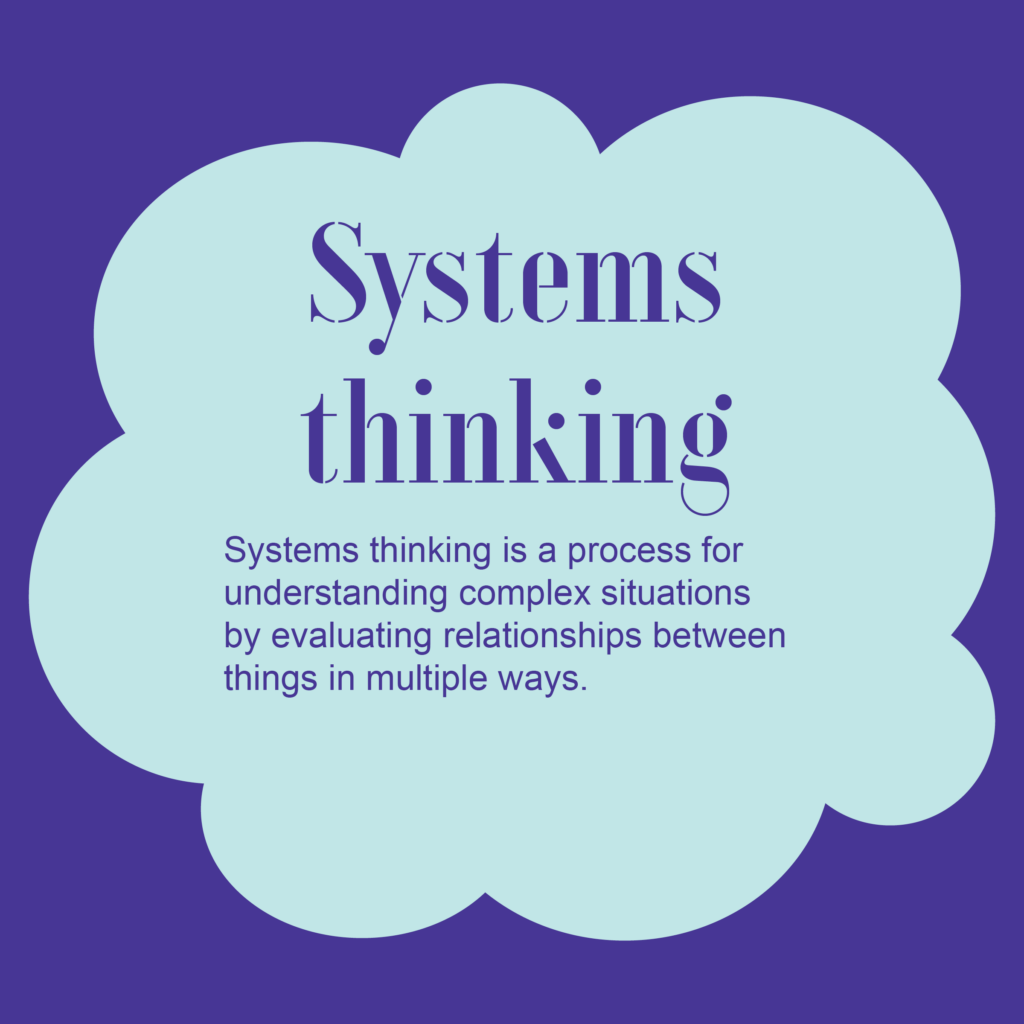
Systems thinking
Systems thinking is a process for understanding complex situations by evaluating relationships between things in multiple ways.
Image 9:
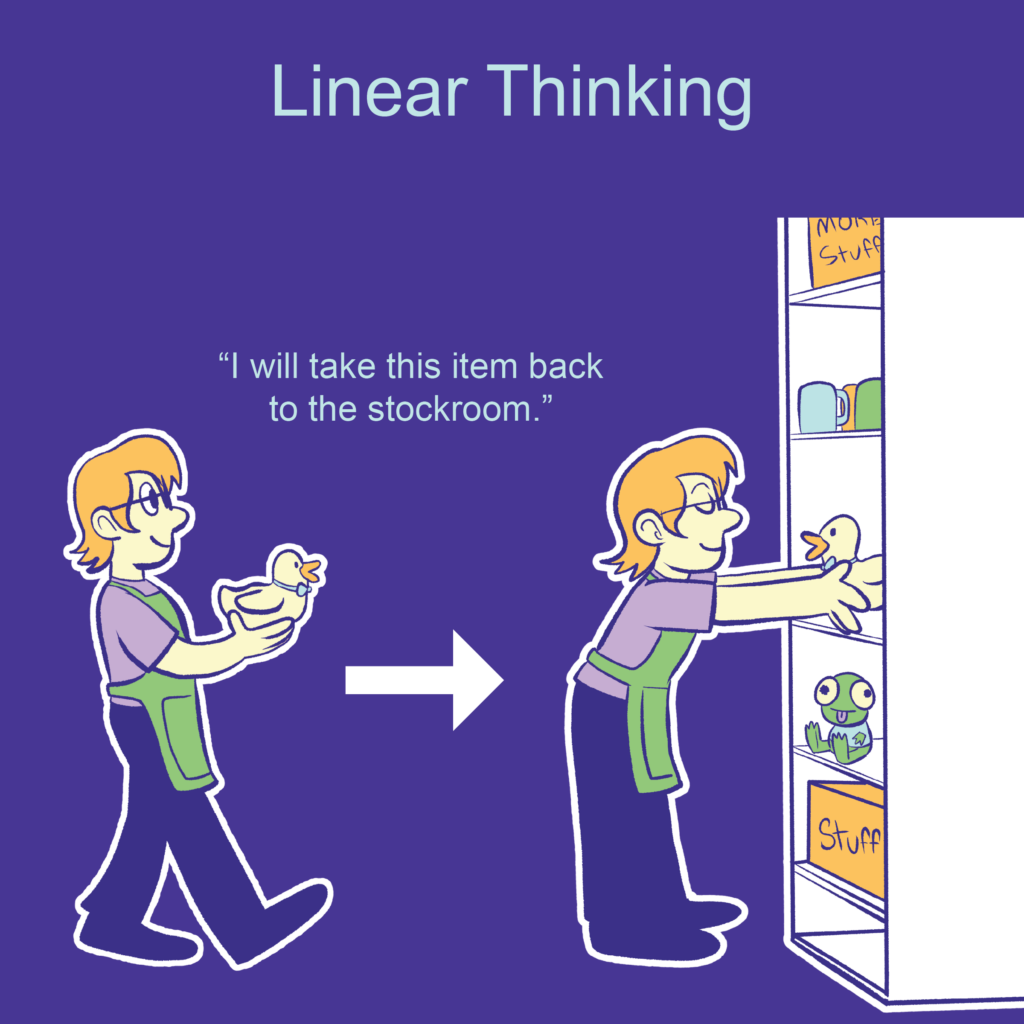
A person holding a duck figurine and placing it on a shelf.
Text: Linear Thinking
“I will take this item back to the stockroom.”
Image 10:
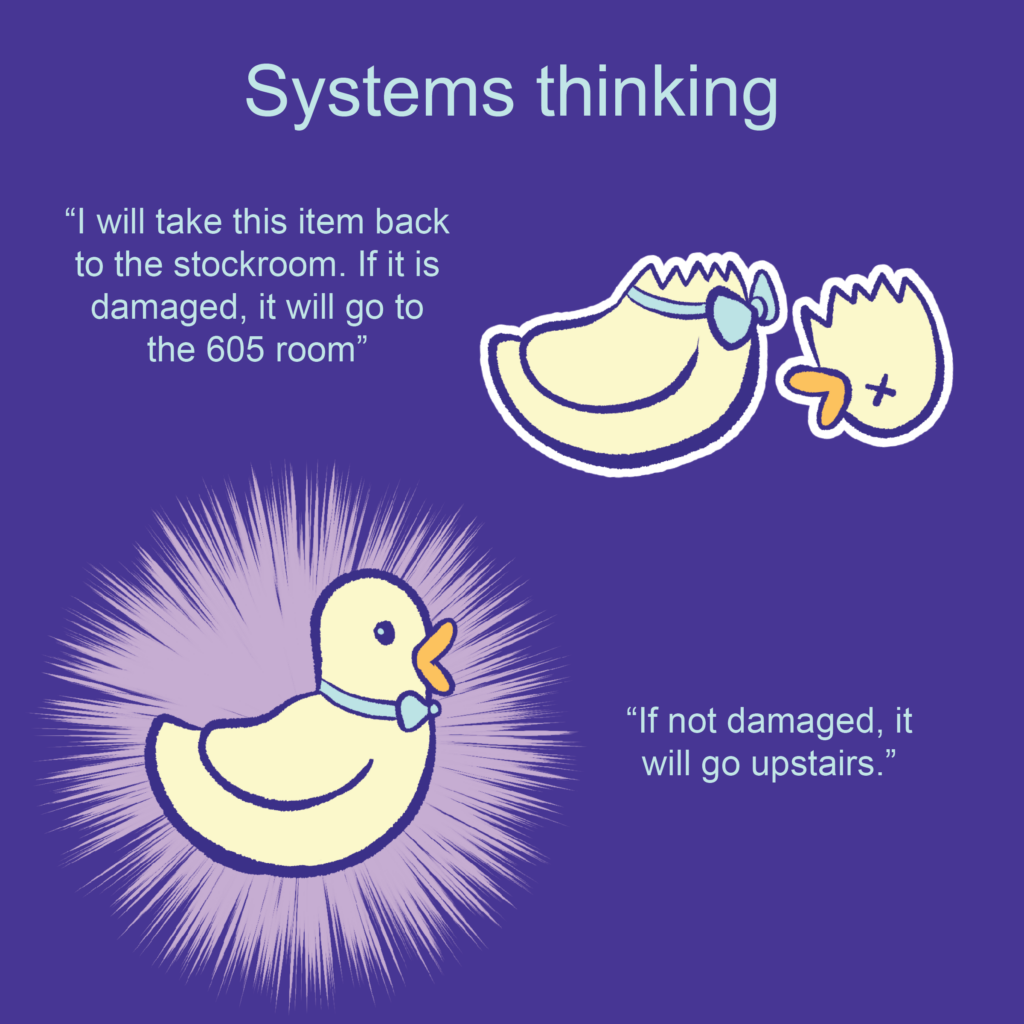
A duck figurine with a broken neck and a a nice unbroken duck figurine with a blue bow on it’s neck.
Text: Systems Thinking
“I will take this item back to the stockroom. If it is damaged, it will go to the 605 room”
“If not damaged, it will go upstairs.”
Image 11:
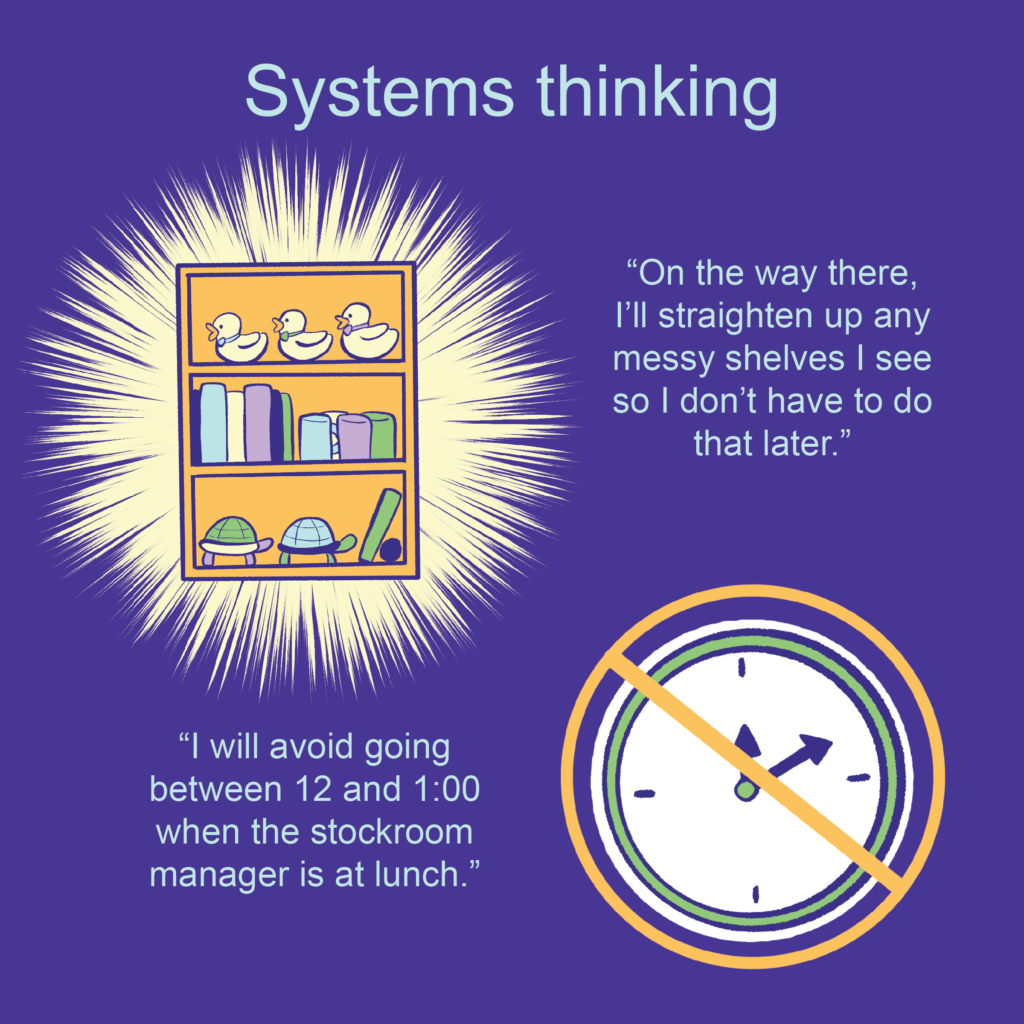
Ducks on an organized shelf with other items on it.
a clock that has been crossed out
Text: Systems Thinking
“On the way there, I’ll straighten up any messy shelves I see so I don’t have to do that later.”
“I will avoid going between 12 and 1:00 when the stockroom manager is at lunch.”
Image 12:
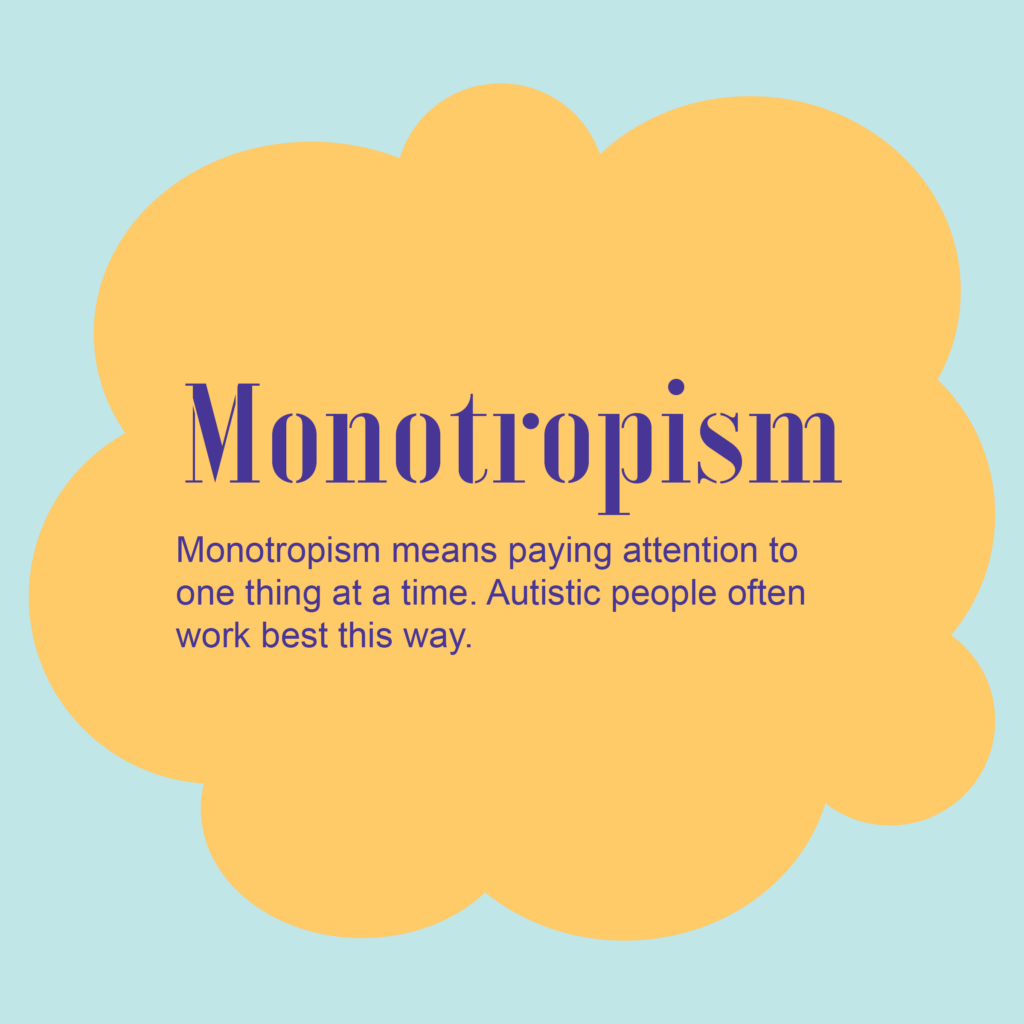
Monotropism
Monotropism means paying attention to one thing at a time. Autistic people often work best this way.
Image 13:
A person sitting happily wearing a Link from Zelda pointed hat and a Triforce shirt and holding a game controller. Next to them is a Korok plush.
Text: Freya LOVES the video game franchise “The Legend of Zelda”, and can spend hours replaying games. Sometimes they get so absorbed that they lose track of time and don’t process basic needs like hunger or the need to use the bathroom for extended periods of time.
Image 14:
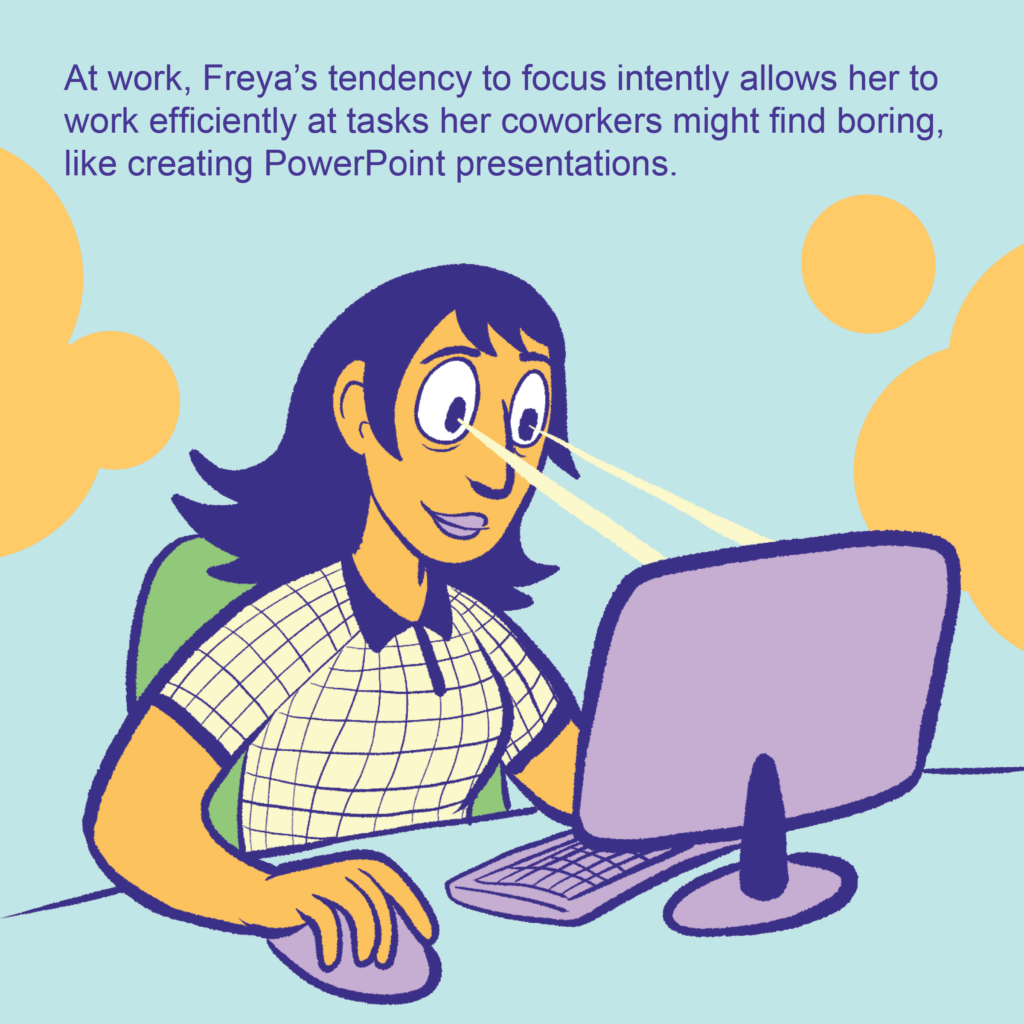
A person working at a computer. Their eyes have yellow lasers aimed at the computer to represent focus.
Text: At work, Freya’s tendency to focus intently allows her to work efficiently at tasks her coworkers might find boring, like creating PowerPoint presentations.
Image 15:
ISAW: innovative supports for autistic workers logo
Human Development Institute logo
Schedule a consultation with ISAW to learn more!
Visit
isaw.hdiuk.org
Contact
Bev Harp at baharp2@uky.edu or Brittany Granville at bgr263@uky.edu